Safety Razor vs Cartridge Razor: Which Is Better?
A cartridge is easier on day one. A safety razor is cheaper every day after that, and often kinder to sensitive skin. Here's the full comparison.
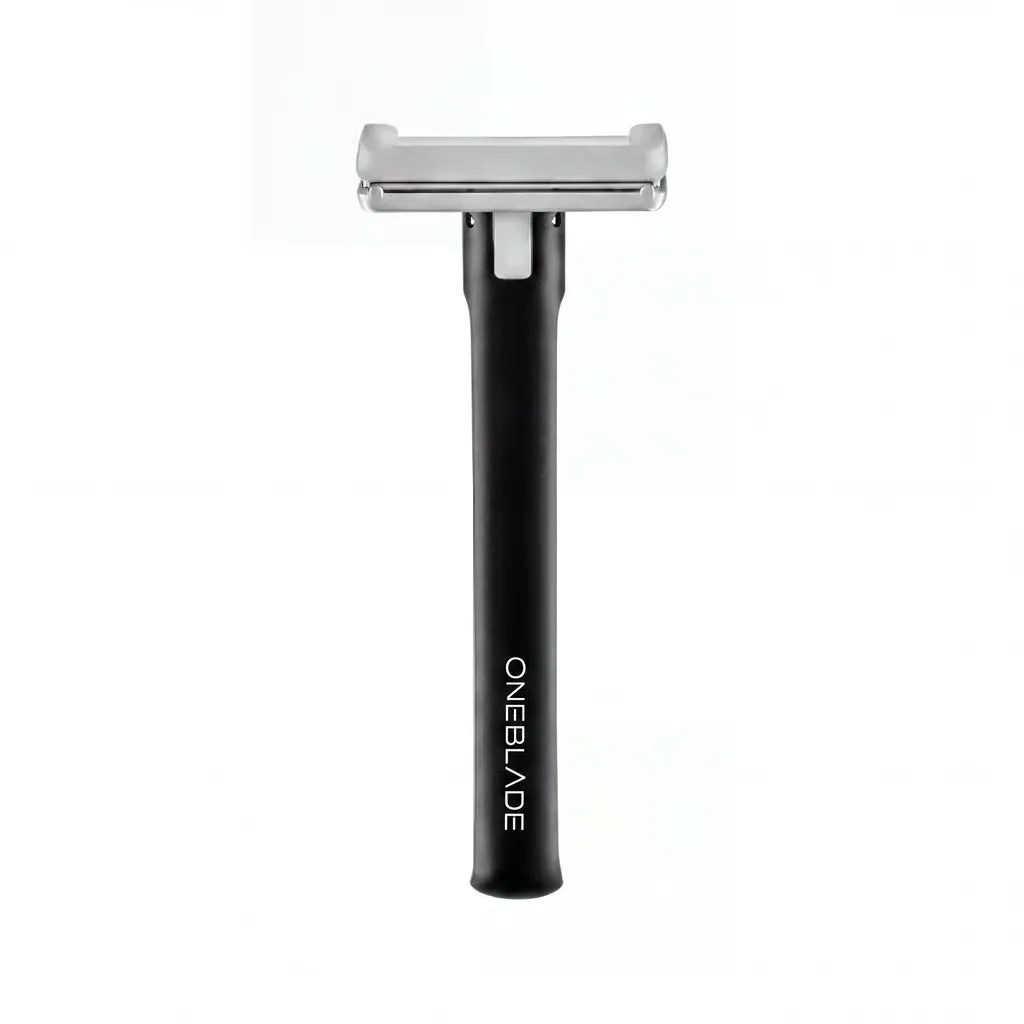
A safety razor is usually better if you get razor burn or bumps, or if you want to spend less on blades. A cartridge razor is better if you want the easiest, quickest shave with no learning curve. A single-blade razor with a pivoting head, like the OneBlade Element, sits in between: one blade, but a head that moves like a cartridge.
Most of us started shaving with a cartridge because that's what was in the shop. Plenty of people never question it. But if your neck is red after every shave, or you wince at the price of refills, it's worth knowing how the two actually compare.
The quick comparison
| Cartridge razor | Safety razor | |
|---|---|---|
| Blades per stroke | 3 to 6 | 1 |
| Cost per blade | About $2 to $4.37 | About 16 to 83 cents |
| Learning curve | None | A few shaves |
| Passes for a close shave | Usually one | Usually two |
| Best for | Speed and convenience | Sensitive skin, bumps and lower running costs |
| Waste | Plastic cartridge each time | Recyclable steel blade |
| Carry-on (US) | Allowed | Only without the blade |
Blade prices from Target, Harry's, Amazon and OneBlade, checked 9 November 2026. TSA rules from tsa.gov.
How a cartridge works
Gillette describes it plainly. The first blade cuts the hair and lifts it slightly out of the skin. Before the hair can pull back, the next blade cuts it again, a little lower. Gillette calls this "hysteresis." After the razor passes, the skin relaxes and the cut hair end retracts below the surface. (Gillette UK)
That's why a 5-blade cartridge feels so smooth after one pass. It's also why some people get ingrown hairs from them. A hair cut below the surface has to find its way back out, and curly or coarse hair doesn't always manage it.
How a safety razor works
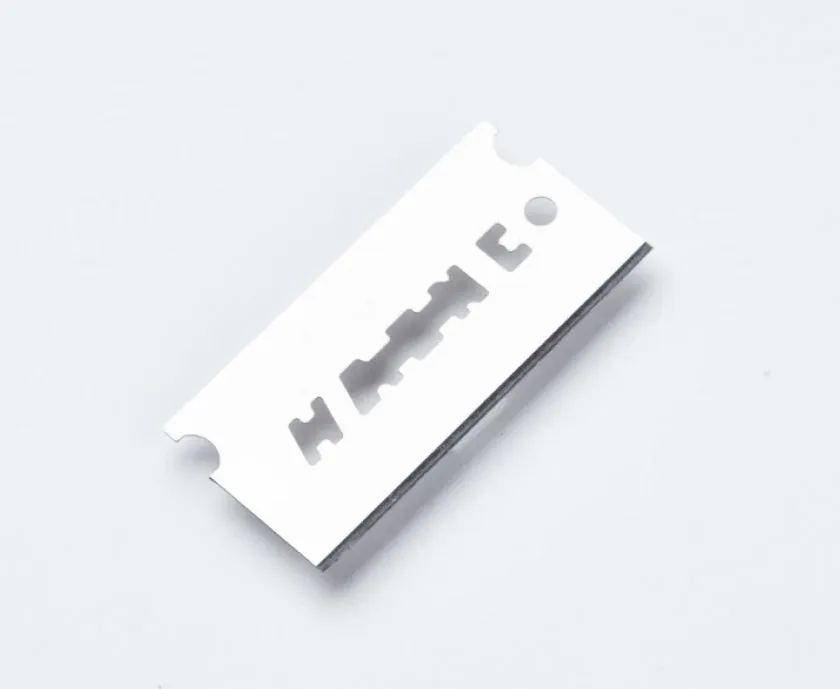
A safety razor holds one blade inside a guard. It cuts the hair at the skin's surface on each stroke. To get as close as a cartridge, most people do two passes: one with the grain, then one across it.
There are two main types:
- Fixed-head safety razors. The classic design. You hold the blade at a shallow angle, around 30 degrees, and that's the skill you learn.
- Pivoting single-blade razors. The head tilts to follow your jaw, like a cartridge does. The OneBlade Element is one of these. You still get one blade, but you don't have to manage the angle.
Comfort and irritation
This is where most people's decision is made.
For people who get razor bumps, the British Association of Dermatologists recommends single blades and avoiding very close shaves that let the hair retract into the follicle. (BAD) The American Academy of Dermatology says a single-blade or electric razor is often recommended, and that the razor must be sharp. (AAD)
The evidence isn't entirely one-sided. A 2025 medical review says multi-blade razors used with good prep and moisturizer don't make razor bumps worse. (Federal Practitioner) So if cartridges don't bother your skin, there's no medical reason to switch.
In short: if your skin is fine with a cartridge, keep using one if you like it. If it isn't, a single blade is the most commonly recommended change.
Cost
Cartridges are cheap to start and expensive to keep. A Gillette ProGlide 8-pack was $34.99 at Target when we checked, about $4.37 a cartridge. Gillette suggests replacing 5-blade cartridges after about 20 shaves. (Gillette) Shaving daily, that's around $80 a year, more if you change more often.
Safety razor blades cost far less. Standard double-edge blades can be under 20 cents each. OneBlade's single-edge HiCarbon blades are about 63 cents each in a 30-pack, and OneBlade says most people get 4 to 5 shaves per blade, which works out to roughly $46 to $58 a year shaving daily. The razor itself costs more up front, often $30 to $100 or more.
Ease of use
Cartridges win here, no contest. You can shave fast, half-awake, at any angle. A safety razor asks for a slower shave and light pressure for the first week or two. Most people find it becomes second nature after a handful of shaves. A pivoting head shortens that learning curve.
Who should switch
Switch to a safety razor if:
- Your neck or jaw gets red, bumpy or itchy after shaving
- You get ingrown hairs in the beard area
- You want to cut what you spend on blades
- You'd like less plastic waste
Stay with a cartridge if:
- Your skin is fine with your current razor
- Speed matters more to you than anything else
- You travel with only a carry-on and need a razor with a blade in it
Our take
Neither is "better" for everyone. But for the many people who get irritation from cartridges, a single blade is the change most worth trying. If you want to try it without learning the angle, a pivoting single-blade razor is the easiest way in.
The Shave Report is owned by the team behind OneBlade, which makes the razor below.
Want more options first? See our best safety razors for beginners and best Gillette alternatives.
Frequently asked questions
Is a safety razor better than a cartridge razor?
For sensitive skin and running costs, often yes. Dermatology groups often recommend a single blade for people prone to razor bumps, and safety razor blades cost far less than cartridges. For speed and ease, cartridges win, especially in your first few weeks.
Is a safety razor better than a 5-blade razor?
A 5-blade razor gives a very close shave in one pass. A safety razor usually needs two passes for the same result, but cuts with one blade per stroke, which many people with sensitive skin find gentler. Which is better depends on whether closeness or comfort matters more to you.
Do safety razors give a closer shave?
They can give an equally close shave, usually over two passes (one with the grain, one across). Multi-blade cartridges are designed to cut slightly below the skin surface, which is very close but can lead to ingrown hairs in some people.
Are safety razors cheaper than cartridges?
Yes, after the first purchase. A Gillette ProGlide cartridge was about $4.37 when we checked. Standard double-edge blades can cost under 20 cents, and OneBlade's single-edge HiCarbon blades work out at about 63 cents each.
Are safety razors dangerous?
No more than any razor, used properly. The blade sits inside a guard. Most nicks come from pressing too hard or holding the wrong angle, both of which are easy to fix. A pivoting head helps keep the angle right.
Sources
- Gillette UK, Why more razor blades make a difference
- Gillette, How often should you change your razor blades
- British Association of Dermatologists, Pseudofolliculitis
- American Academy of Dermatology, Razor bump remedies
- Federal Practitioner (2025), Beyond the Razor: Managing Pseudofolliculitis Barbae in Skin of Color
- Target, Gillette ProGlide Razor Blade Refills (8 ct)
- OneBlade, HiCarbon SE blades (30)
- OneBlade, Element product page
- Amazon, King C. Gillette double-edge blades
- TSA, Safety razor with blades
- TSA, Disposable razor
This guide is general information, not medical advice. If a rash, bump or infection doesn't clear up, see a doctor or dermatologist. Prices were checked on 9 November 2026 and can change. The Shave Report is owned by the team behind OneBlade and earns money from OneBlade sales and some retailer links. How we make money.