How to Shave With a Safety Razor: A Beginner's Step-by-Step Guide
A safety razor isn't hard to use. It just asks for three things a cartridge doesn't, the right angle, no pressure and a bit of patience. Here's the full routine.
To shave with a safety razor, soften your beard with warm water, apply a proper lather, then hold the razor at about 30 degrees to your skin and let its own weight do the work. Use short, light strokes with the grain, rinse often, and re-lather before any second pass. Never press down. Most nicks come from pressure or the wrong angle.
If you've only ever used a cartridge, your first safety razor shave will feel slow. That's normal. A cartridge holds the angle for you and hides the blade behind guard bars. A safety razor hands that job to you. Learn three habits (angle, pressure and patience) and the rest is easy.
What you need
- A safety razor and fresh blade
- A shaving cream or soap (a brush helps but isn't essential)
- A towel, warm water and a moisturizer or balm for afterward
How to shave with a safety razor, step by step
- Load the blade. Open the head, set the blade in place and close it. Check the blade sits square and even on both sides. Shaving School points out that a crooked blade is a common cause of nicks.
- Soften your beard. Shave after a warm shower, or hold a warm, damp towel on your face for a couple of minutes. The AAD says to wet your skin and hair first to soften them.
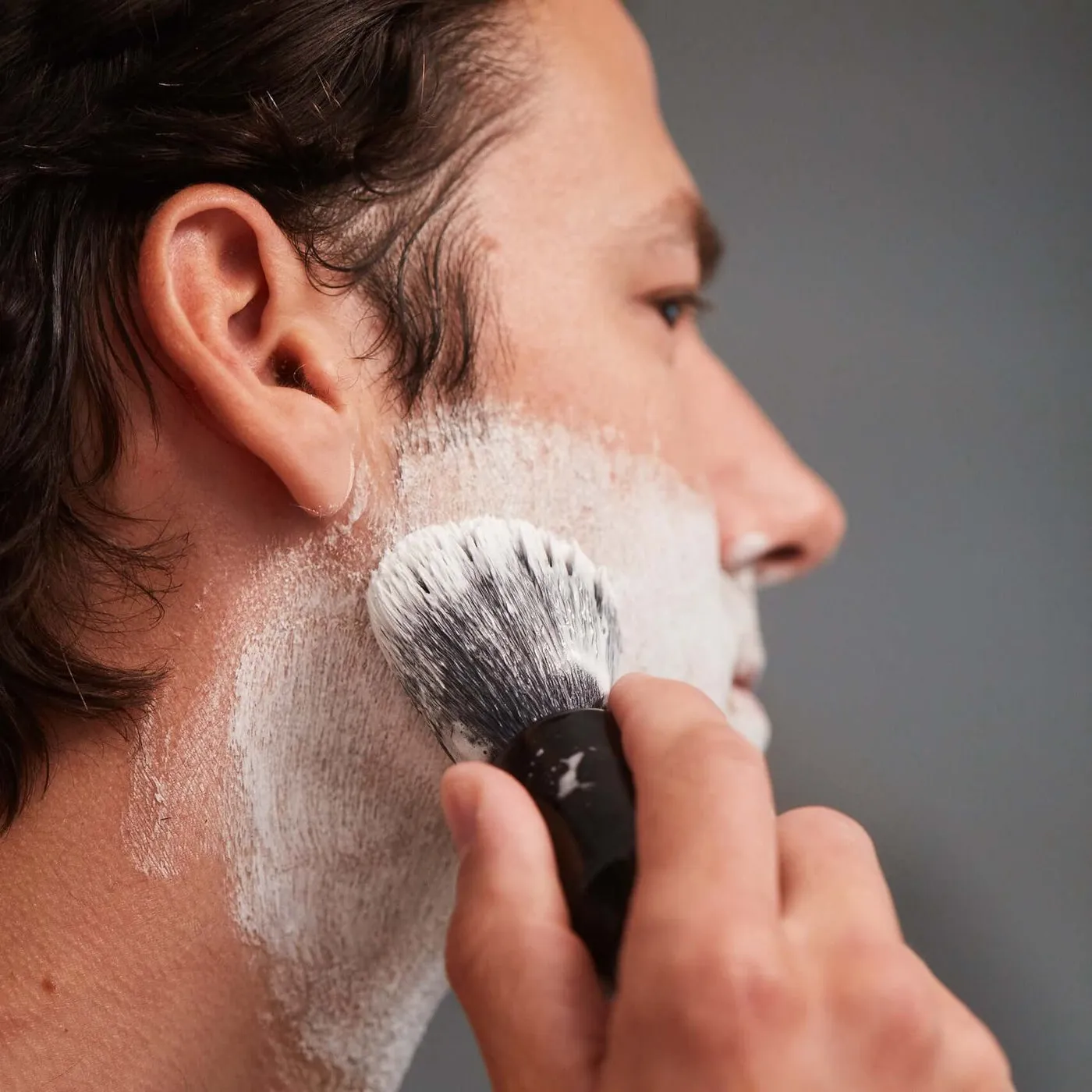
- Lather up. Apply a rich lather and give it a minute or two to soften the hair. A brush lifts the hairs and works the lather in, but your fingers will do.
- Find the angle. Rest the top of the head flat on your cheek with the handle pointing straight out. Slowly lower the handle until you feel the blade start to cut. That's usually around 30 degrees. Gillette suggests 30 to 45.
- Let the razor do the work. Don't press. The weight of the razor is enough. Pressure is the number one cause of nicks.
- Short strokes, with the grain. Shave in the direction your hair grows, using short strokes of an inch or two. Slow down on your chin, jawline and upper lip.
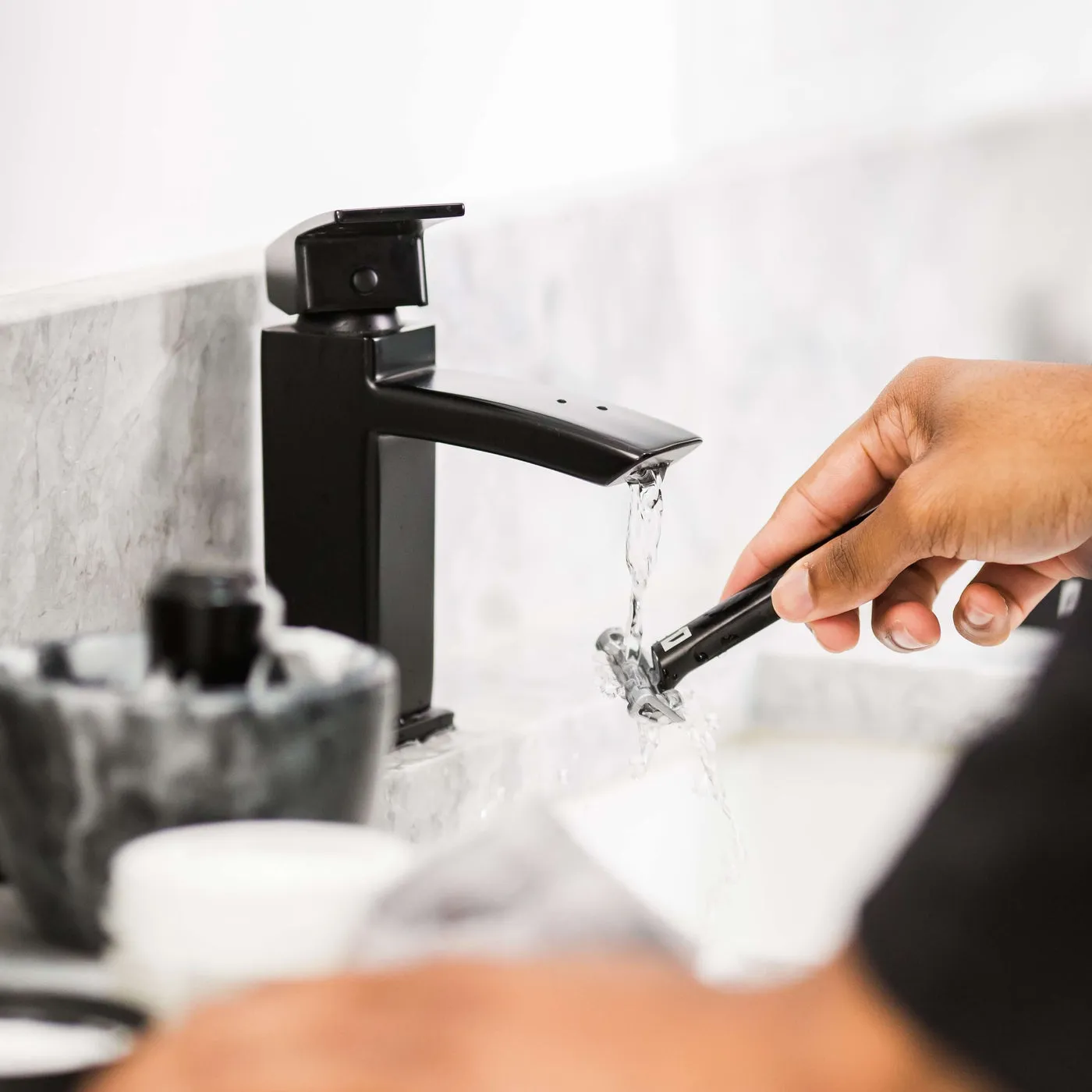
- Rinse often. Rinse the blade under running water every stroke or two. Gillette warns against tapping it on the sink, which can damage the blade.
- Re-lather for a second pass. If you want it closer, lather again and shave across the grain. Never go over bare skin with no lather. If you get irritation, skip this step.
- Finish cool. Rinse with cool water, pat dry and apply a moisturizer or balm. Dry the razor and store it somewhere dry.
Sources: Gillette UK, Shaving School, AAD.
How to avoid nicks
Almost every nick comes down to one of these:
| Problem | Fix |
|---|---|
| Pressing down | Hold the razor loosely and let its weight do the work |
| Angle too steep | Start flat and lower the handle until it just cuts |
| Blade not seated square | Reload and check it's even on both sides |
| Rushing the jaw and chin | Shorter strokes, and change direction to follow the curve |
| Shaving bare skin | Re-lather before every pass |
If you do nick yourself, rinse with cold water and press a clean tissue on it for a minute or two.
Mapping your grain
Hair doesn't all grow the same way. On many men it grows down on the cheeks and changes direction on the neck. Run your fingers or a toothbrush over a day's stubble. Smooth is with the grain, rough is against it. The AAD suggests the toothbrush trick. (AAD)
When to change the blade
The AAD suggests a new blade after 5 to 7 shaves. (AAD) Some blades need changing sooner. If it starts to tug or you get more irritation than usual, swap it. Blades are cheap, so don't push them.
Dispose of used blades safely. Many brands sell a small blade bank, or use an old tin with a slot cut in it.
If you travel, the TSA allows a safety razor in carry-on bags only without the blade. Loose blades go in checked luggage. (TSA)
Fixed head or pivoting head?
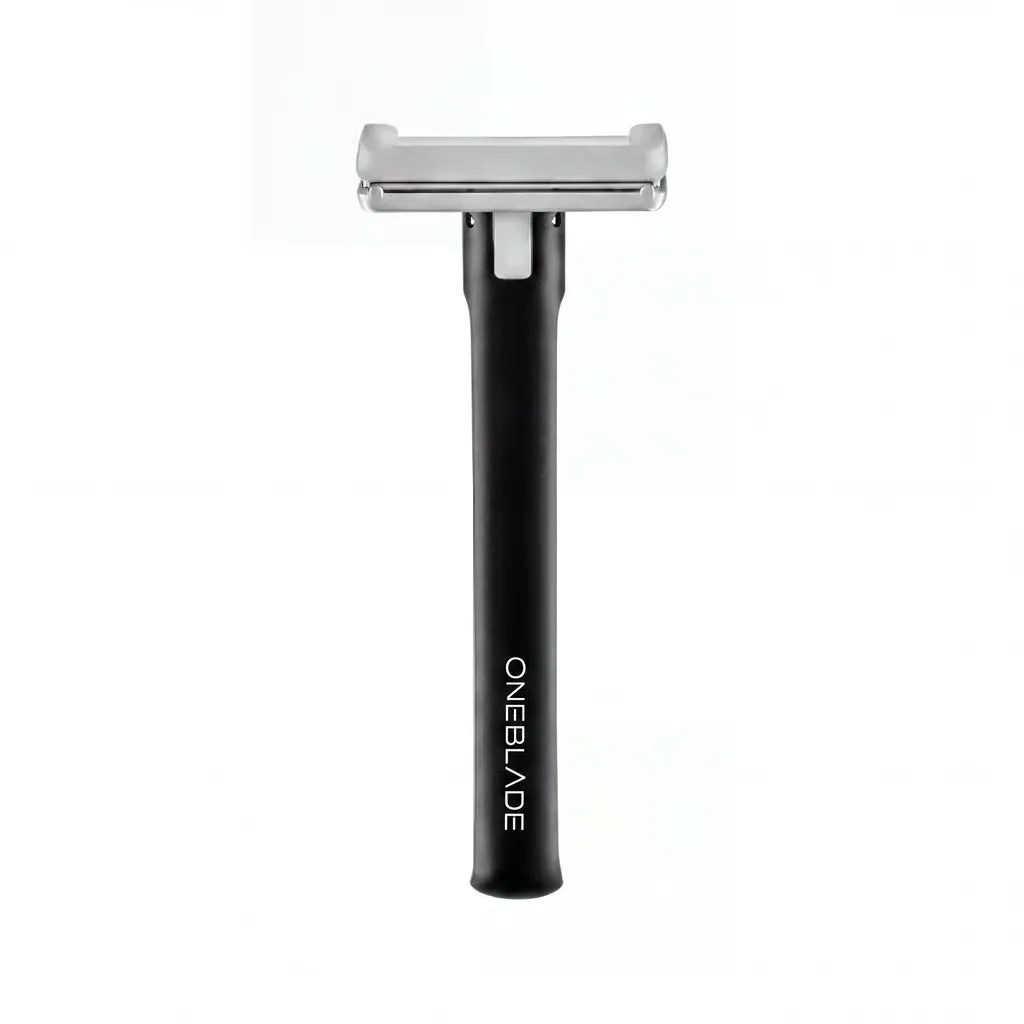
Most safety razors have a fixed head, which is why the angle takes practice. A few have a head that pivots, so it follows your jaw like a cartridge and keeps the blade closer to the right angle. If you're nervous about the learning curve, that's the easier way in.
The Shave Report is owned by the team behind OneBlade, which makes a pivoting single-blade razor.
For more options, see our guide to the best safety razors for beginners.
Frequently asked questions
What angle should I hold a safety razor?
About 30 degrees to your skin. Gillette suggests 30 to 45 degrees. A simple way to find it: put the top of the head flat on your cheek with the handle sticking straight out, then lower the handle slowly until the blade starts to cut.
How hard should I press with a safety razor?
Barely at all. Let the weight of the razor do the work. Pressing is the most common cause of nicks with a safety razor.
Why do I keep cutting myself with a safety razor?
Usually one of four things: too much pressure, too steep an angle, a blade that isn't seated square, or going across the curve of your jaw or chin too fast. Short strokes and light pressure fix most of it.
How often should I change a safety razor blade?
The American Academy of Dermatology suggests after 5 to 7 shaves. Depending on the blade and your beard, some need changing sooner. If it starts to tug, change it.
Can you shave against the grain with a safety razor?
You can, but start with the grain. If your skin handles that well, try a second pass across the grain, and only then against it. If you get razor bumps or irritation, stick to with the grain.
Is a safety razor good for beginners?
Yes, with a bit of patience. Expect the first week or two to feel slower. Razors with a pivoting head, which move like a cartridge, are often easier to start with than fixed-head razors.
Sources
- Gillette UK, How to shave with a safety razor
- Shaving School, How to avoid nicks and cuts when shaving
- American Academy of Dermatology, How to shave
- American Academy of Dermatology, Razor bump remedies
- TSA, Safety razor (without blade)
- OneBlade, Element product page
Prices were checked on 9 November 2026 and can change. The Shave Report is owned by the team behind OneBlade and earns money from OneBlade sales and some retailer links. How we make money.